
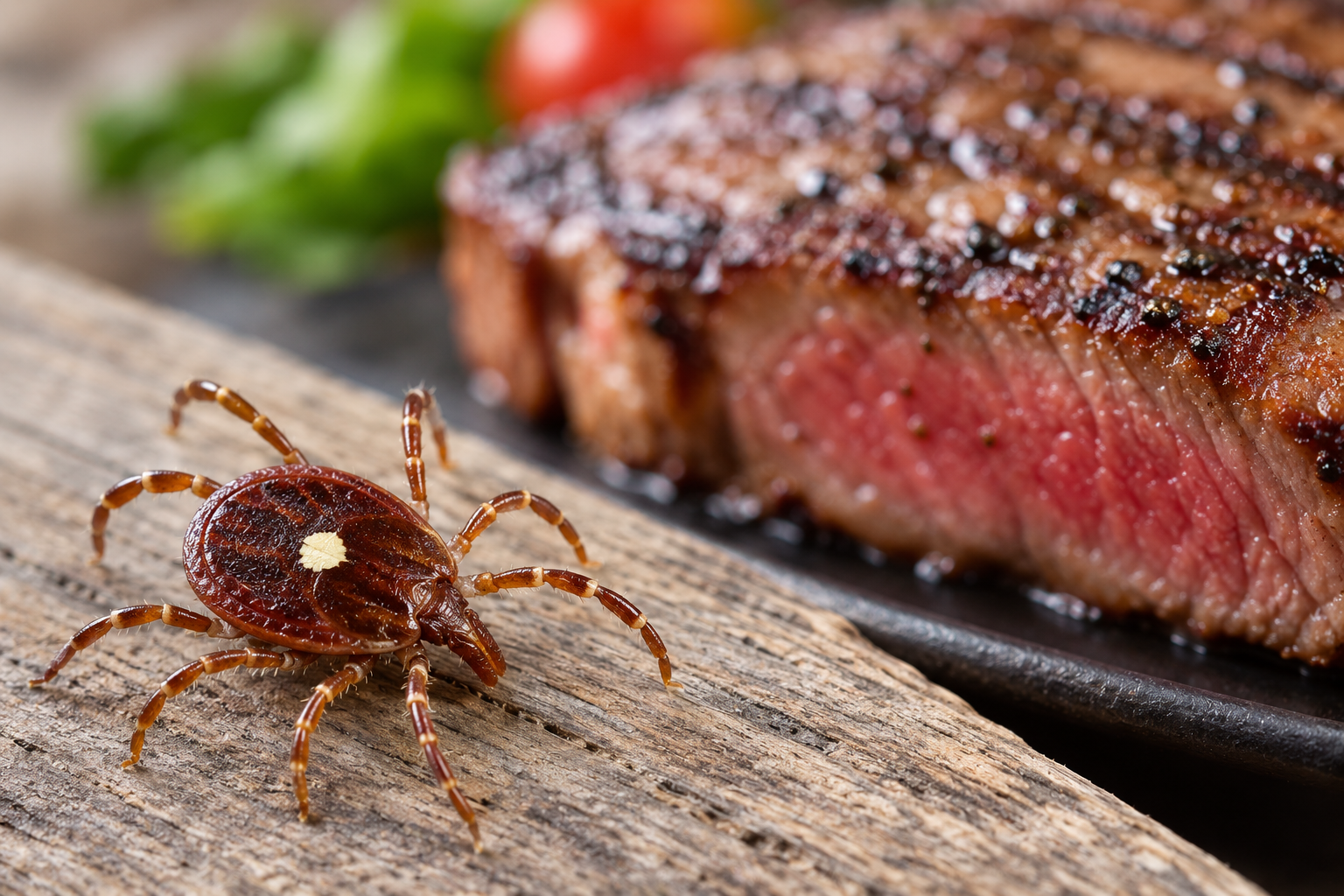
Tick bites can trigger red meat allergy in Oklahoma, leaving some people unable to eat foods they once enjoyed without risking an allergic reaction.
The condition is called alpha-gal syndrome, or AGS. It can develop after certain tick bites and leave people allergic to alpha-gal, a sugar found in most mammals and products made from them.
That means something as ordinary as eating beef or pork can trigger symptoms hours later. For some people, dairy and other mammal-derived products can cause problems too.
A recent Oklahoma Public Media Exchange report looked at how the condition is changing daily life for Oklahomans as awareness of the unusual allergy grows.
Why Tick Bites Can Trigger Red Meat Allergy in Oklahoma
The connection sounds strange because the allergic reaction doesn’t happen when the tick bites.
Instead, a bite can sensitize a person’s immune system to alpha-gal. Later, eating meat or using certain products containing alpha-gal can trigger an allergic reaction.
The CDC describes alpha-gal syndrome as a potentially serious allergy that can develop after a tick bite. In the United States, the lone star tick is most often associated with AGS.
One of the strangest parts of the condition is the delay.
Unlike many food allergies that cause symptoms shortly after eating, alpha-gal reactions commonly appear two to six hours later. Symptoms can include hives, nausea, stomach pain, swelling and difficulty breathing. Severe reactions can be life-threatening.
That delay can make it difficult for someone waking up sick in the middle of the night to connect the reaction with a hamburger or steak eaten hours earlier.
Some Oklahomans Are Changing How They Eat
The latest Oklahoma reporting shows what that can mean outside a doctor’s office.
One woman featured in the report stopped regularly dining out after being diagnosed with alpha-gal syndrome. Her husband operates an allergy-friendly restaurant in Edmond and has adapted how food is prepared to reduce the risk of cross-contact for customers with dietary restrictions.
For others, the changes can go beyond avoiding steak.
Depending on the person, products containing ingredients derived from mammals may also cause reactions. The specific triggers and severity can vary considerably from one person to another.
Cases like these help explain why tick bites can trigger red meat allergy in Oklahoma has become more than an obscure medical issue. State officials are now preparing to collect better information about how often alpha-gal is being detected.
Oklahoma Is Starting to Track Alpha-Gal
Until now, one of the problems with understanding alpha-gal syndrome has been figuring out how many people actually have it.
Oklahoma lawmakers took a step toward changing that this year. Gov. Kevin Stitt signed legislation adding alpha-gal disease to the state’s list of reportable conditions.
Beginning in November, doctors and laboratories will be required to report positive alpha-gal test results to state health authorities, according to the Oklahoma Public Media Exchange.
There is an important limitation.
A positive blood test alone doesn’t necessarily mean someone has alpha-gal syndrome. The CDC says diagnosis should consider symptoms, medical history and possible tick exposure.
That distinction will matter as Oklahoma begins collecting more data.
Avoiding Tick Bites Is the Best Defense
Finding a tick doesn’t mean someone is going to develop a meat allergy. Most tick bites do not result in alpha-gal syndrome.
But AGS adds another reason to take tick prevention seriously, particularly in places where lone star ticks are common.
The CDC recommends using appropriate insect repellents, wearing protective clothing when spending time in wooded or brushy areas, and checking yourself for ticks afterward.
Oklahoma’s new reporting requirement should eventually give health officials a clearer picture of how often positive alpha-gal tests are occurring in the state.
For people already living with the syndrome, though, the impact isn’t theoretical.
A tiny tick bite can change what’s safe to put on the dinner table.