
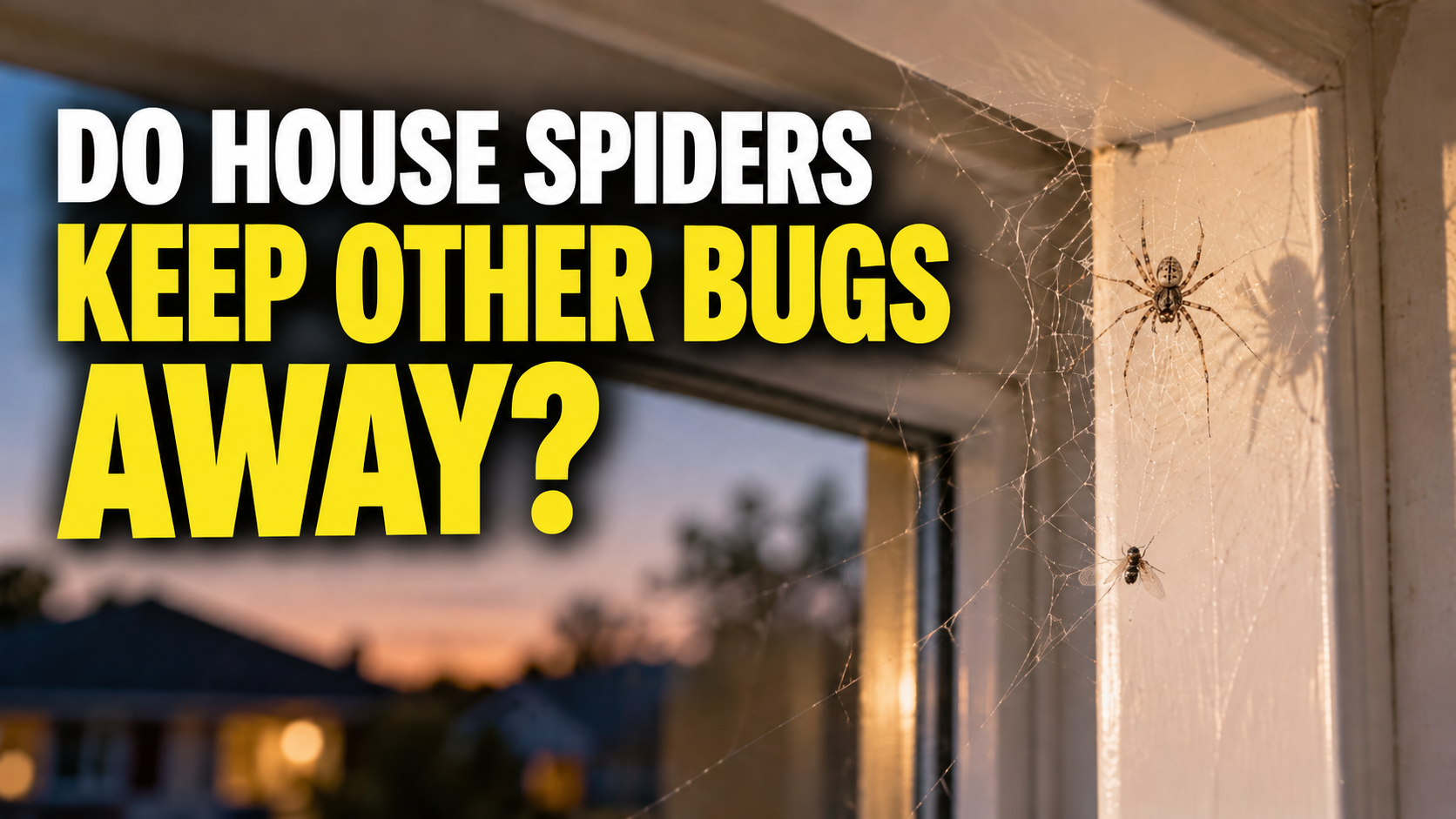
Do House Spiders Keep Other Bugs Away? To a degree, yes. The spider sitting quietly in a basement corner is not just waiting to scare someone walking past. Spiders are predators, and household species survive by catching insects and other arthropods. Flies, moths, mosquitoes, small beetles and other crawling or flying prey can all end up on the menu depending on the spider species. That means allowing a few harmless spiders to remain around a home can provide a small amount of natural pest control. But there is an important catch: spiders do not prevent bugs from entering the house, and a noticeable increase in spiders can actually mean there is plenty of food available for them.
Spiders Really Do Eat Household Pests
The Colorado State University Extension describes spiders as beneficial arthropods because they survive by feeding on insects and can play an important role in controlling insect pests in homes as well as gardens, fields and forests. Some spiders build webs and wait for insects to become trapped, while hunting spiders actively stalk prey. Different species target different foods, so one spider may catch small flying insects while another spends its nights hunting crawling arthropods along walls or floors. A single spider will not eliminate a household pest problem, but over time spiders can remove insects that would otherwise remain alive inside.
Does That Mean Spiders Keep Bugs From Coming In?
No. This is where the popular idea goes too far. Spiders do not create a protective barrier around doors, windows or foundations. Ants can still enter through cracks, mosquitoes can fly through an open door and roaches can move through plumbing or structural gaps regardless of how many spiders are in the basement. What spiders do is prey on some insects after they encounter them. Think of them as opportunistic hunters rather than security guards. They can reduce individual insects, but they cannot stop an infestation from starting when food, moisture and entry points remain available.
More Spiders Can Actually Mean More Bugs
There is another side to having lots of spiders in a house. The University of Minnesota Extension specifically recommends reducing the insects spiders use as a food supply when homeowners want to reduce spider populations. Properties near fields, lakes or other areas with abundant insects may naturally support more spiders. That creates an interesting clue for homeowners. If several webs suddenly appear around lights, windows or a basement, the spiders may be there because those areas are producing a steady supply of prey. In other words, more spiders do not necessarily mean the spiders are causing a problem. They may be revealing another one.
What Bugs Do House Spiders Eat?
There is no single house-spider diet. Common indoor spiders can capture flies, moths, mosquitoes and a variety of other small arthropods. Some species specialize more than others, while many spiders simply eat whatever appropriately sized prey becomes available. Penn State Extension describes spiders as beneficial animals that feed on a wide range of arthropods, including insects. The Penn State Extension also notes that most spiders encountered around homes are harmless to people. That does not mean every spider should automatically be ignored. Species identification still matters, particularly in regions where medically significant spiders occur.
Should You Leave House Spiders Alone?
For a few harmless spiders tucked into areas where they are not bothering anyone, there may be little reason to remove them. Colorado State notes that from a biological standpoint spider control is often unnecessary. A spider quietly occupying a garage, basement or corner can catch insects without chemicals, traps or maintenance. On the other hand, webs throughout living areas or many spiders appearing suddenly may justify looking for the underlying food source. Simply killing the spiders without reducing insects, moisture or entry points may only create temporary results because new spiders can move back into a favorable environment.
Outdoor Lights Can Feed the Spider Population
Porch lights and exterior fixtures can create an indirect spider buffet. Lights attract moths and other flying insects, and spiders often establish webs where that prey is concentrated. Minnesota Extension recommends reducing outdoor lighting or changing how security lights are positioned when homeowners want fewer spiders around doors and windows. Reducing the insects attracted to the building can also reduce the predators that follow them. PestMarket’s Pest Control Guide covers additional ways to reduce common household pests and the conditions that attract them.
The PestMarket Verdict
Do House Spiders Keep Other Bugs Away? Partly. House spiders really do catch and eat other insects, so a few harmless spiders can provide a small amount of natural pest control. What they cannot do is prevent insects from entering a home or solve an established infestation. In fact, a noticeable spider population can sometimes be a clue that plenty of prey insects are already available nearby.
Evidence Grade: STRONG EVIDENCE
University Extension sources consistently describe spiders as beneficial predators of insects and other arthropods. The evidence supports their role in reducing individual pests, but not the stronger claim that keeping spiders around will make a home pest-free. A few spiders can help. A lot of spiders may be telling you to look more closely at what they are eating.