
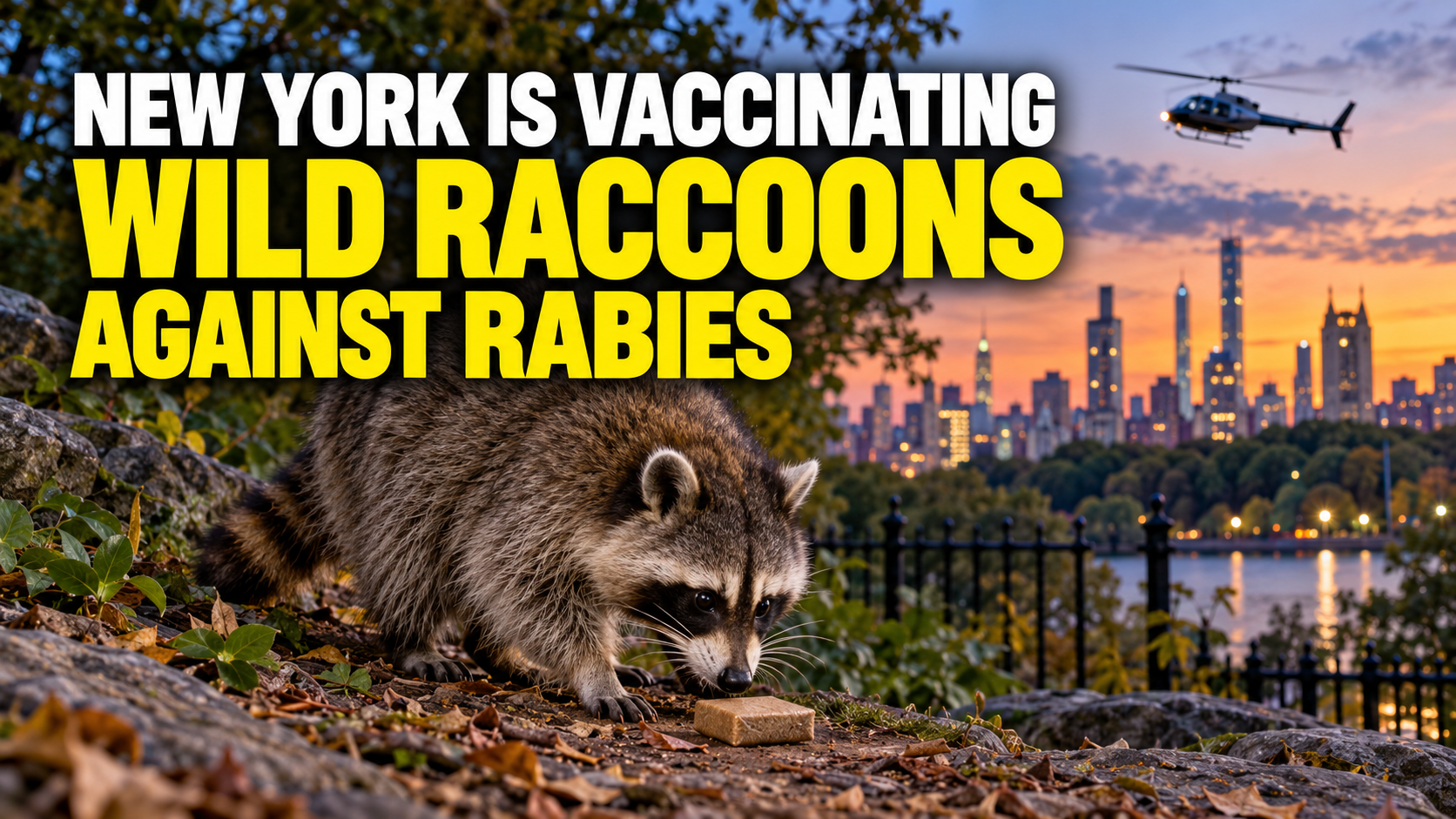
New York Is Vaccinating Wild Raccoons Against Rabies as city health officials distribute edible vaccine baits across parts of Brooklyn, Queens and Staten Island this October. The program began October 5 and is scheduled to continue through mid-October, weather permitting. According to the New York City Health Department, 24 raccoons and five skunks have tested positive for rabies in New York City so far in 2026. The campaign is being carried out with the U.S. Department of Agriculture and NYC Parks in an effort to reduce the spread of rabies among wildlife before it reaches people or pets.
The Vaccine Comes Inside a Fish-Scented Bait
The vaccination method is very different from the injections most people associate with vaccines. Small brown packets containing oral rabies vaccine are coated or scented to attract raccoons. NYC Health says the baits resemble small ketchup packets and contain a small amount of pink liquid vaccine. When a raccoon bites into the packet, the vaccine enters its mouth and helps immunize the animal against rabies. The animals do not have to be captured, restrained or individually handled, allowing health officials to vaccinate wildlife on a much larger scale.
A Helicopter Is Dropping Vaccine Baits on Staten Island
How the baits are distributed depends on the borough. In Brooklyn and Queens, workers are hand-tossing baits and placing them in fixed bait stations in selected parks and wooded areas. Staten Island is getting a more unusual approach. A low-flying helicopter is being used to distribute vaccine baits over parks, wooded areas and less-populated locations. The different methods allow officials to reach places where raccoons are likely to travel while minimizing unnecessary contact with heavily populated areas.
Why New York Is Targeting Raccoons
Rabies can infect any mammal, but raccoons are an especially important reservoir in New York City and across much of the eastern United States. NYC Health says the raccoon variant of the rabies virus is present locally and is most efficiently transmitted between raccoons, although infected animals can occasionally spread the virus to other species such as skunks or cats. The CDC lists raccoons, bats, skunks and foxes among the wildlife most frequently found with rabies in the United States. Rabies attacks the nervous system and can be deadly once symptoms develop, making prevention and rapid treatment after a possible exposure extremely important.
The Program Is Part of a Much Larger U.S. Effort
New York City’s campaign is not an isolated experiment. The USDA Animal and Plant Health Inspection Service has worked with state and local partners on oral rabies vaccination programs since 1995. USDA says roughly 6.5 million oral vaccine baits are distributed in selected states each year to create zones designed to contain raccoon rabies and prevent it from spreading into new areas. Distribution methods can include aircraft, helicopters, vehicles and bait stations, depending on the landscape and population density.
What Should You Do If You Find One?
NYC Health advises people to leave the vaccine baits alone whenever possible. If one is lying in an open area where a child or pet could easily reach it, residents can use gloves or a plastic bag to move it beneath trees or bushes. The city says people and pets cannot get rabies from the bait. Direct contact with the vaccine liquid can very rarely cause a skin reaction, so anyone who touches the liquid should wash the affected area with soap and warm water and contact a healthcare provider or the NYC Poison Center. Pets that eat several baits may experience vomiting, but officials say the bait is not considered harmful to pets.
Seeing a Raccoon During the Day Does Not Automatically Mean Rabies
A raccoon walking around during daylight is not by itself proof that the animal is rabid. NYC Health specifically tells residents not to be automatically alarmed by daytime raccoon activity because the animals may simply be searching for food. More concerning signs can include abnormal aggression, severe illness or unusually friendly behavior. Residents are advised to keep their distance from wildlife and call 311 if an animal appears sick or behaves erratically. Pet rabies vaccinations should also be kept current.
Why Wildlife Vaccination Matters
The strategy is essentially preventive pest and wildlife management on a citywide scale. Instead of waiting for infected animals to come into contact with people or pets, officials attempt to reduce the amount of virus circulating in wildlife populations. Homeowners can reduce wildlife encounters by securing garbage, avoiding intentional feeding and limiting access to food around properties. PestMarket’s Pest Control Guide also covers practical steps for reducing unwanted pest and wildlife activity around homes.
The Campaign Continues Through Mid-October
The current baiting operation is expected to continue through the middle of October if weather allows. NYC previously conducted another oral rabies vaccination operation in Brooklyn and Queens in May. With 29 wild animals already testing positive for rabies this year, city officials are again turning to one of the most unusual public-health tools in urban wildlife management: getting wild raccoons to vaccinate themselves simply by biting into a fish-scented packet.